
AI Automations
Business Automation for Data Tracking
- Synchronize data between different applications/platforms
- Manage project tasks, track progress, and automate notifications.
- Create automated workflows for time tracking and expense reporting.
Automations for connecting with existing customers and discovering new ones
- Automation of re-connecting with customers
- Automated processes for discovering new customers
Automated Social Media Management
- Automatic Post Upload
- Engagement Metric Tracking
- Set Up Automatic Answers to Frequently Asked Questions
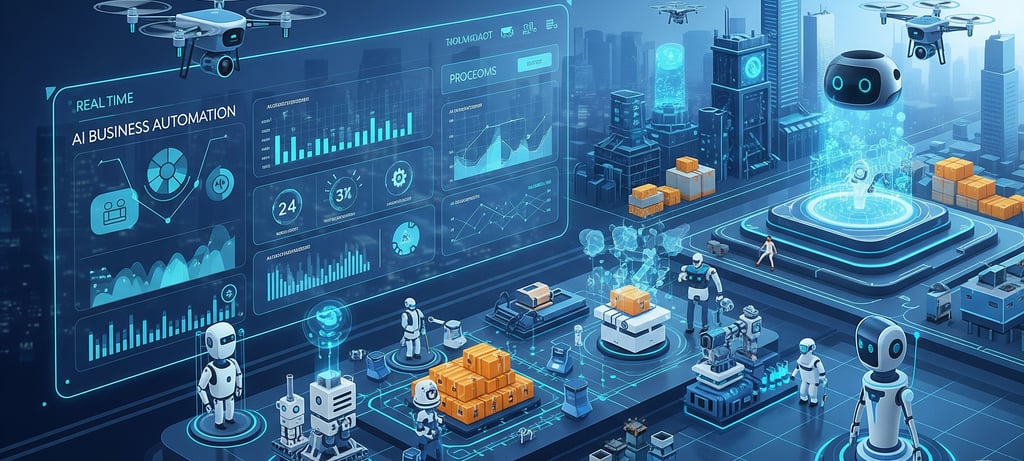
Personalized AI automations for your Business!
Why AI?
AI automation is transforming businesses by offering unparalleled opportunities to save both time and money. At its core, artificial intelligence enables companies to automate repetitive and time-consuming tasks, freeing human resources to focus on more complex and strategic activities. This leads to a significant increase in efficiency and a reduction in operational costs.
Time Savings
First and foremost, AI automation is a powerful tool for saving time. Across many industries — from manufacturing to customer service — there are countless processes that traditionally require manual intervention.
For example, AI systems can analyse vast amounts of data in seconds, something that might take a team of people days or even weeks to complete. This includes analysing market trends, managing inventory or automatically generating reports.
AI-powered chatbots can respond to customer enquiries 24 hours a day, seven days a week, reducing waiting times and improving the overall customer experience. As a result, employees can concentrate on tasks that require human judgement, creativity and emotional intelligence, such as innovation, strategic planning and relationship building.
Cost Savings
In addition to saving time, AI automation directly contributes to cost reduction. Lower labour costs are an obvious benefit, as AI systems can perform tasks that previously required multiple employees.
Automation also reduces the risk of human error, which can be costly to correct — particularly in areas such as accounting or supply chain management. AI can further optimise the use of resources by predicting demand and preventing overstocking or shortages, resulting in more efficient capital management.
For example, in the manufacturing sector, AI can predict when machinery will require maintenance, preventing expensive downtime and production losses. Over the long term, investments in AI often pay for themselves many times over through increased productivity and reduced operating costs.
Conclusion
AI automation is not simply a technological innovation — it is a strategic necessity for modern businesses. By relieving companies of repetitive tasks, optimising workflows and reducing operational expenses, AI enables organisations to operate more efficiently.
Businesses that adopt and integrate artificial intelligence into their operations will be more competitive, more productive and better prepared for the challenges of the future.
Contacts
Telephone:
Email: sales@digital-evolution.net